
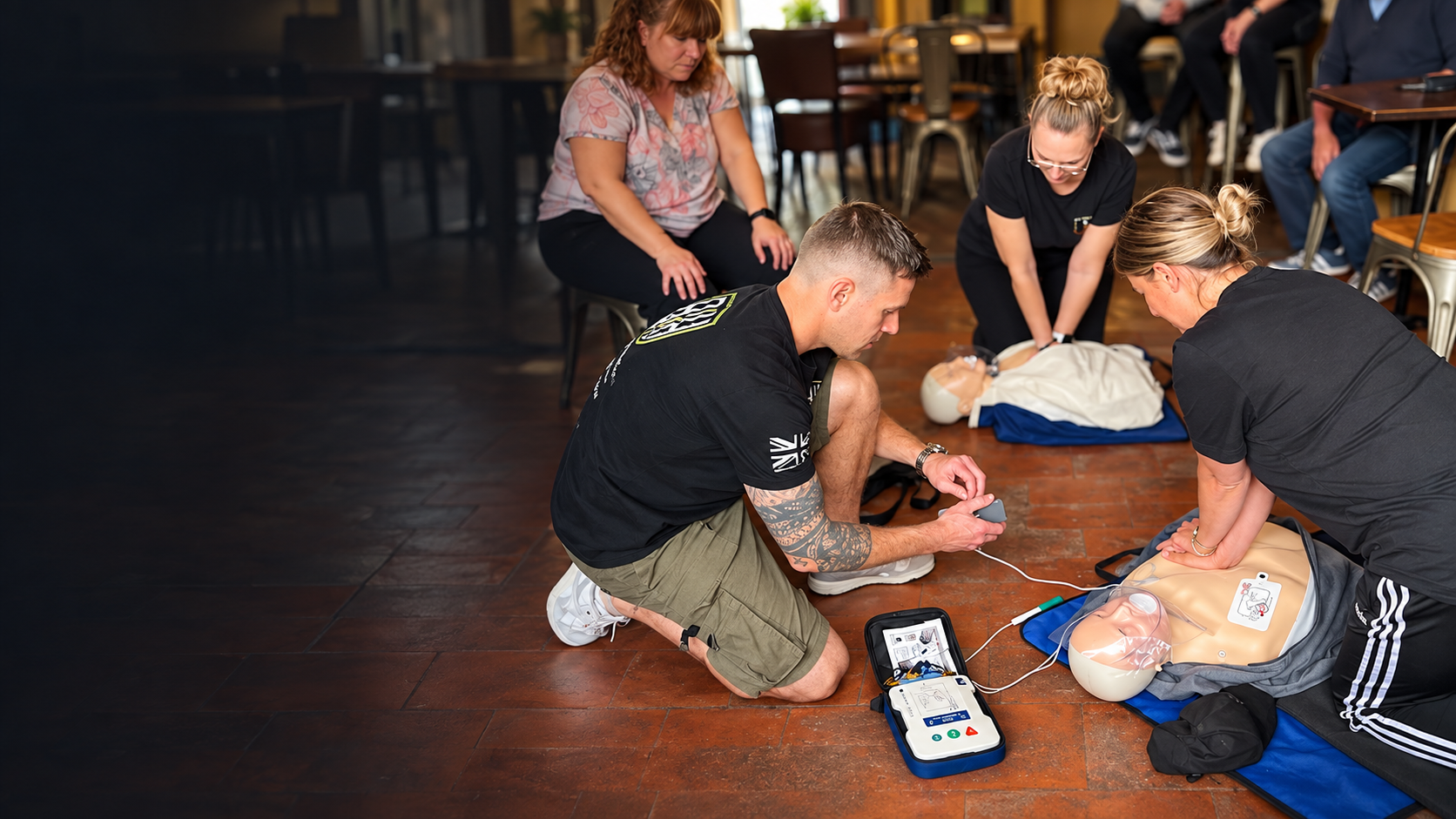
Defibrillators & AED guidance
Be ready when every second matters.
A defibrillator can play a critical role when someone suffers a sudden cardiac arrest. Whether you need help choosing an AED, want to build your team’s confidence or simply want to understand how one works, we’re here to help.
How it works
Simple to use. Designed to guide you.
An AED analyses the heart's rhythm and will only deliver a shock when one is needed. Once switched on, the device provides clear visual and spoken instructions to guide you through each step.
Call 999 & start CPR
If someone is unresponsive and not breathing normally, call 999 immediately and start CPR. Ask someone else to fetch an AED if one is available.
Switch on the AED
Switch on the defibrillator, expose the person's chest and attach the pads in the positions shown on the pads or device.
Follow the instructions
The AED will analyse the heart rhythm and tell you exactly what to do next. Follow its spoken and visual prompts and continue CPR when instructed.
In an emergency
Know what to do.
If someone collapses and appears unresponsive, act quickly. These simple steps can help you respond while professional help is on the way.
Make sure it is safe to approach and check whether the person responds.
If they are unresponsive, call 999 immediately. The ambulance service call handler can guide you.
Assess their breathing. If they are unresponsive and not breathing normally, assume cardiac arrest.
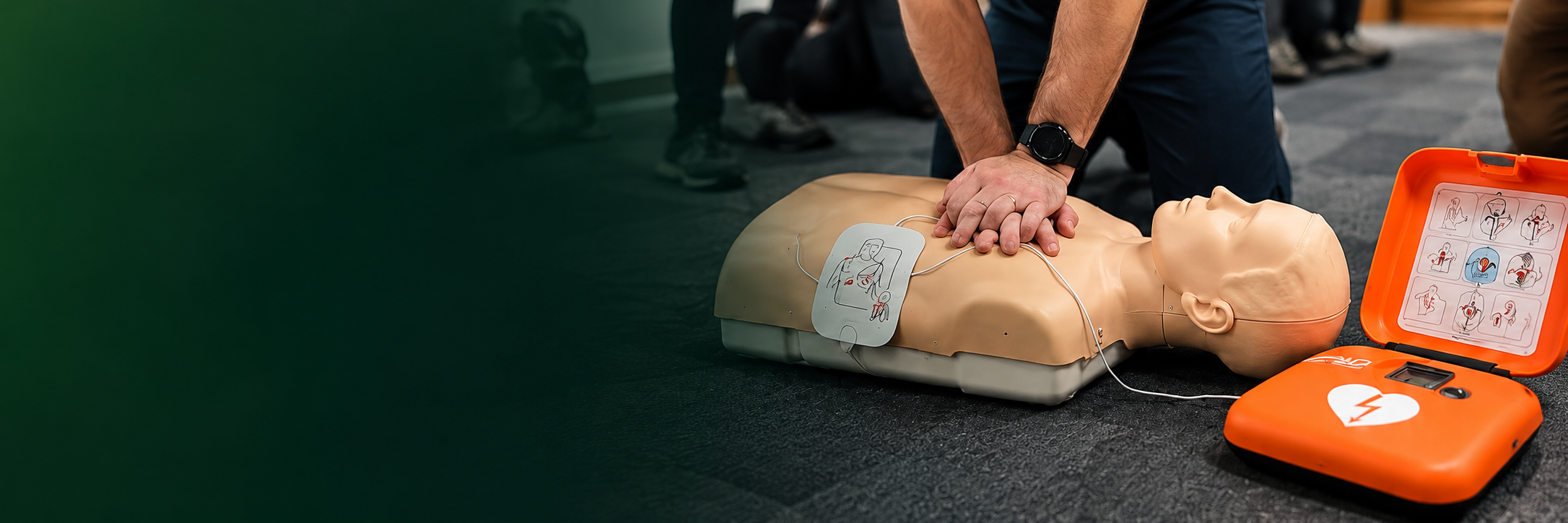
Begin chest compressions in the centre of the chest at 100–120 compressions per minute, around 5–6 cm deep.
Ask someone else to fetch the nearest AED if possible while CPR continues.
Switch it on, attach the pads to the bare chest and follow the spoken and visual instructions.
AED pad placement
Follow the diagrams.
Follow the device.
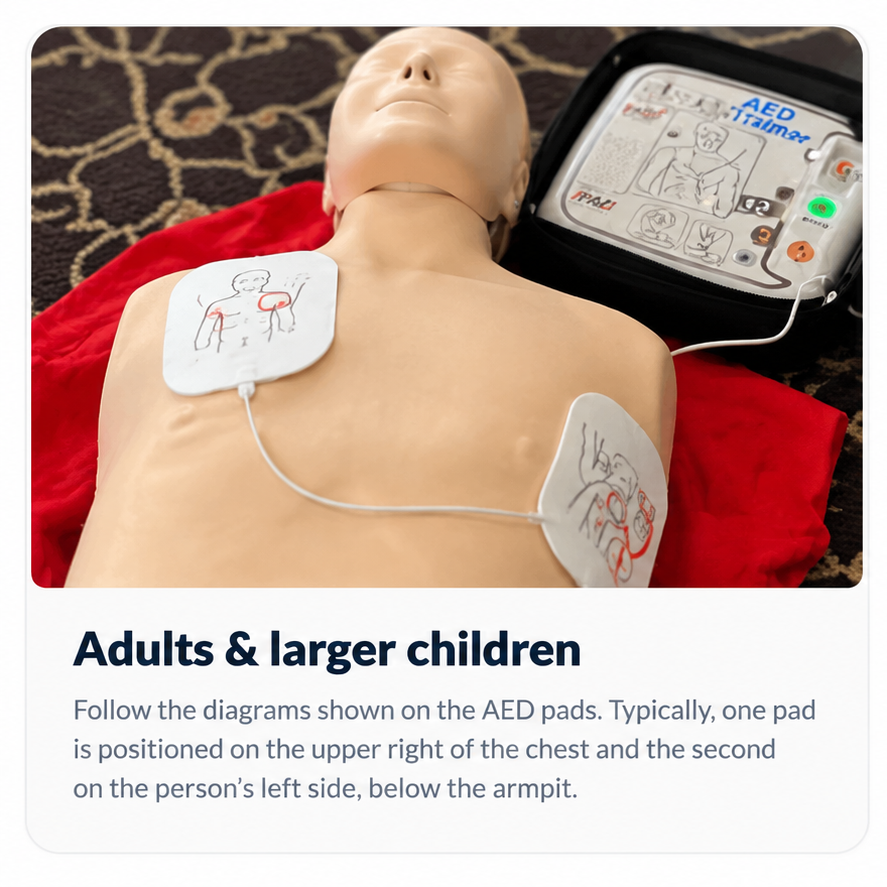
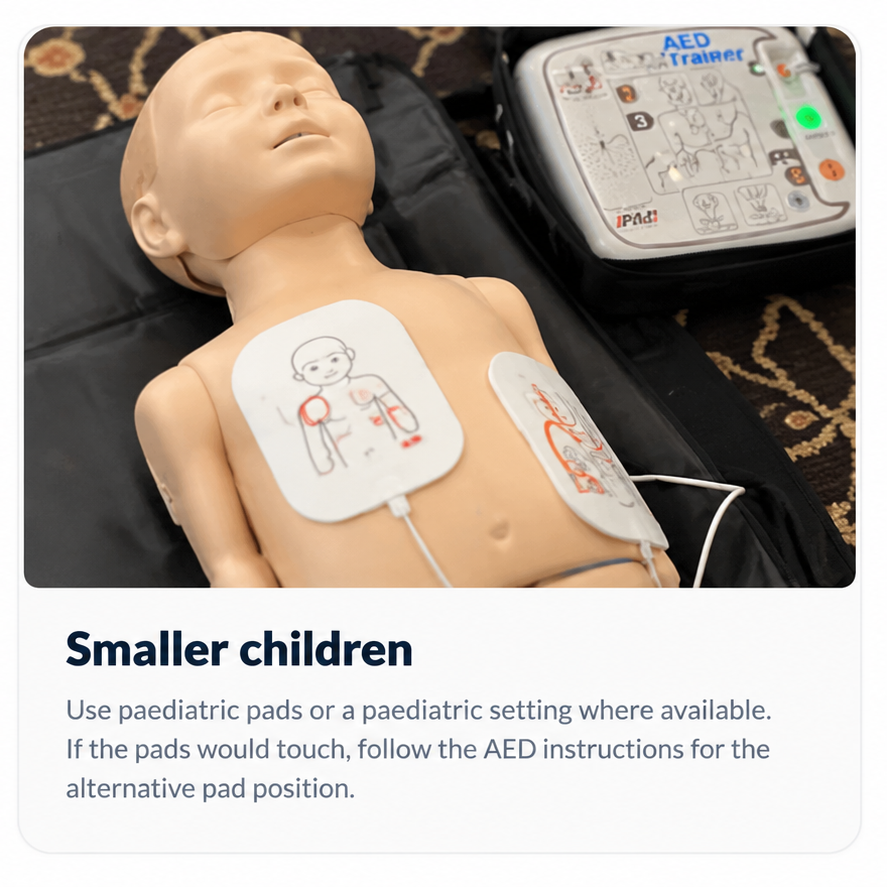
AED pads need good contact with bare skin and must be positioned correctly. Always use the diagrams printed directly on the pads as your guide and follow the spoken instructions from the AED.
NEED HELP WITH DEFIBRILLATORS?
Make sure your workplace is prepared.
BH Training Solutions can help you build confidence using an AED, provide practical CPR and defibrillator training and advise you on choosing the right equipment for your workplace or community space.
✓ CPR & AED confidence training
✓ Help choosing the right defibrillator
✓ Workplace and community support
